Jan Pieklo, Landscape After War (IV): Brcko.
The Sawa flows calmly between its banks. The bridge destroyed during the war has been rebuilt by combat engineers from the international SFOR, and again links the Croatian side with the side where a sign proclaims in Cyrillic letters: "Republika Srpska." Beyond lies Brcko, a strategic city for the Bosnian Serbs. It lies in the narrow corridor that appears on maps as a thin line between Croatia and the Muslim-Croatian Federation. This corridor links the two parts of the Republika Srpska, the northwest part centered around Banja Luka and dominated by the adherents of President Biljana Plavsic, and the southeast part, with its capital in Pale, the headquarters of Radovan Karadzic's people. Karadzic is wanted for war crimes. The Serbs erected a monument in the Brcko town square during the campaign for the OSCE-organized local elections. Cast in bronze and mounted on a marble plinth in the middle of a neglected, war-ravaged town, it commemorates "the heroism of the Serbian defenders of Brcko."
Ethnic Cleansing: Photo Albums
Before the outbreak of war in 1992, Brcko was the commercial and cultural capital of the Bosnian province of Posavina. It was also the largest river port in Yugoslavia, shipping more than a million tons of freight per year. Brcko had about 90,000 inhabitants, of whom approximately 25% were Croatians, 44% Muslims and 20% Serbs. Two Serbian residents of the town, Yeseniya and Desanka, were schoolgirls then and had friends from all the ethnic groups.
Then the war started. There was heavy fighting for the town. Although they were a minority, Bosnian Serbs took Brcko and still control it. Yeseniya and Desanka's friends went to the front -- some fought under the Croatian checkerboard flag, and others in the B and H army or the Bosnian Serb army. Yeseniya recalls lying flat on the ground at the roadside, paralyzed with fear, as tanks rolled past and shells and grenades exploded around her. "I could never go through that again," she says. "I would flee, as far from here as possible."
Later, the two girls spent some time as refugees in Serbia. (The official Bosnian jargon insists that there are no refugees, only DPs -- displaced persons, who will someday return home under the terms of the Dayton Accords.) They quickly convinced themselves that no one wanted them there. Belgrade residents blamed the shortage of sugar on the DPs. As soon as the fighting subsided, the girls went home, along with their families. Brcko had changed. Their old friends from other ethnic groups were gone. The abandoned homes of the Croats and Muslims had been taken over by Serbian refugees from Sarajevo, Krayina and other parts of Bosnia. Now, the benches in the school that Yeseniya and Desanka attended are filled exclusively by little Serbs who have no idea that life here was once completely different. The girls' Serbian former classmates grew up in the trenches, dulling their fear with rakija and firing on their Muslim and Croatian former friends. Now, those young men find it hard to fit in.
"I don't know what will become of them," Yeseniya worries. "They are finished, burned out, ruined. They don't know how to do anything. They don't know the meaning of work... Corruption and the black market have seeped in everywhere and become the only way of life."
Growing up in wartime conditions, Desanka and Yeseniya saw too much to be susceptible to cheap sentiments. They are pragmatic; they want a normal life. They both speak English well enough to work as translators for the numerous international agencies with offices in Brcko.
"If the Serbs don't like it," they say, "then let them give us jobs with the same pay."
Yeseniya's mother works as a schoolteacher; Yeseniya cannot remember when her mother saw her last paycheck.
Desanka is studying English in Banja Luka. She does not like Belgrade, but she would like to see New York someday. She observes, however, that American democracy must be a fiction if there are so many homeless people on the streets.
Samra is a Muslim who lived in Brcko before the war. She may well have attended the same school as Desanka and Yeseniya. Now, like them, she works as a translator for the OSCE. As a DP, she is "temporarily residing in the Federation." Thanks to the OSCE, she spent a few hours in Brcko during the election campaign. It might have been a coincidence, or perhaps she arranged it. In any case, she had a chance to visit the home where her family used to live. She stood there a long time before knocking. An old Serbian man opened the door. Samra explained that she used to live there before the war. Embarrassed, the old man said he was sorry. He, too, had lost his home, and had been assigned to this one.
"If you want to take anything that was yours, go ahead," he said, inviting her in. Samra entered hesitantly.
"I'd like to take our snapshots," she said.
The Serb took an envelope full of family photographs from a drawer.
"I knew that you would come back for them someday," he said warmly.
Samra burst out weeping.
Perhaps the old man left an album of his own family snapshots behind in Sarajevo or the Krayina, and will never see them again. Could his pictures have burned when a shell struck his home? In any case, he had been ready for Samra's visit. He had not destroyed her photographs.
The Elections That No One Expected
Since Brcko was a bone of contention between Croats, Serbs and Muslims, the 1995 Dayton Accords did not regulate its status. Brcko was to come under international arbitration later, and the final deadline for a decision has been delayed three times. The diplomats and negotiators want to restore the town's former multicultural, multi-ethnic character. In practice, this would mean the return of crowds of refugees.
Simika, a former policeman, fought during the war for a Serbian Brcko. Like many other Serbs, he cannot imagine the return home of the Muslims and Croatians. The Serbs fought for this place and have commemorated their struggle with a monument; they believe they paid too high a price for it all to be wasted.
Brcko has been divided as a result of the war. The town itself remains under the control of the Bosnian Serbs, while its southern suburbs lie within the Croatian-Muslim Federation. The Federal authorities refuse to acknowledge this status quo; they regard doing so as an acceptance of ethnic cleansing. The OSCE thus faced a dilemma before the local government elections. The decision to hold simultaneous elections in the Federation seemed like a solution, but then the Serbs threatened a boycott. There were violations of voter registration procedures in Brcko, so registration was begun again from scratch, under international supervision. Until election day, the OSCE did not believe that the voting would come off in Brcko.
The followers of President Biljana Plavsic tried to seize the local police headquarters, which was controlled from Pale. They failed. A crowd was mobilized against them and attacked SFOR vehicles and the UNIPTF international police force. All the international organizations were evacuated from Brcko. The crowd damaged UNIPTF vehicles and buildings. When OSCE workers returned to work, they noticed a fundamental change in the mood of the local populace, which was accusing the international organizations of bias and of attempting to pressure the Serbs. New posters bearing pictures of Radovan Karadzic and the legend "Don't dare touch him! He means peace!" appeared on the walls and shopfronts that were already plastered with socialist, radical and democratic party election posters.
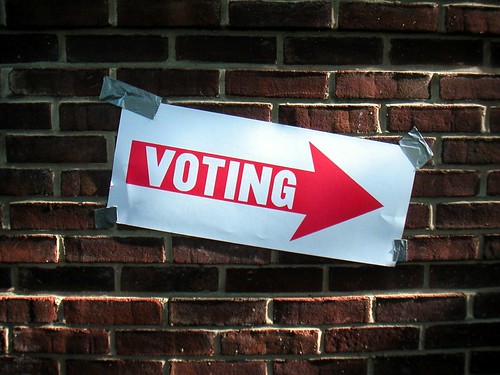
The residents of Brcko started looking in a less friendly way at the American soldiers, with their dangerous-looking M-16s, from the SFOR patrols. The boys from Texas or Arizona were used to being surrounded by rings of awestruck children. Now, the suddenly changed atmosphere shocked them. Friendly and convinced that they had come here to "defend democracy," they must now have felt like unwelcome intruders. The Pale-controlled media even began referring to them as the "army of occupation." To everyone's surprise, the elections went ahead despite this atmosphere of mutual antagonism. The turnout was high, because the stakes were also high. For the Serbs, this was the way to confirm the status of Brcko and the wartime status quo. Young adults and old people with canes went to the polling stations that the OSCE had set up. Little old ladies wrapped in black scarves came, and so did paralyzed people in wheelchairs. Many of the older people did not know how to read, and had to be assisted by their relatives. Hostile glances were cast at the patrolling SFOR armored vehicles. A woman who had lost her son in the war cursed and shook her fist at the American soldiers. The international observers monitoring the voting noted no major irregularities. As expected, the nationalistic parties garnered the most votes: the SDS (Serbian Democratic Party), SRS (Serbian Radical Party), and the independent socialists not associated with Milosevic.
Simika and his friends are happy. They belong to the SDS, and their party won. Yeseniya and Desanka have given up trying to stay in touch with their old Muslim and Croat friends. Samra has returned to the territory of the Federation. Now she sits in somebody else's apartment, looking at her recovered family photographs by the light of someone else's lamp; she thinks of the Serb who lives in her house. The Serb thinks in turn of the home somewhere in Sarajevo or the Krayina from which he had to flee in haste, and wonders if someone will give back his family photograph album someday...
Branislawa has relatives in Muslim-controlled Tuzla. She visited them and found that people were different there. They smiled more, and were more open and friendly. "We Serbs,"she says, "are too proud. We do not know how to ask anything of anyone. And that is why things are as they are."
The ZOS, the Zone of Separation, is the old front-line. It now separates the hostile sides. Whatever homes were once there have been reduced to smoke-blackened ruins with weeds growing thickly over them. Some of the terrain is still mined (as an American officer explained, mines were used as burglar alarms during the war, to protect houses from intruders). The graffiti on the walls indicates who was here last.
Lights wink along the boundaries of the ZOS at night. There are people brave enough to go back to what remains of their homes. The election was held here, too. Buses brought people to vote. This is where the international community wants to initiate the reconstruction of a multi-ethnic society. Perhaps it will be easier for the peoples of Bosnia to live together in this desolate, ravaged strip of land.
Translation into English: William Brand
back